

 Personalized medicine means the right drug for the right patient at the right time. Here is AZ, we are building a solid foundation for continued future success, from several strong HS programs, to top-rated university research efforts to applied clinical research to industry collaborations. Hear from experts in each of these sectors to learn more about how AZ will become a leader in this field.
Presenters:
- Phil Howardell, Paradise Valley High School District CREST/STEM Coordinator, Phoenix
- Dr. Sara Byron, Research Assistant Professor, Center for Translational Innovation at TGen
- Karen Anderson, MD, PhD, Associate Professor, The Biodesign Institute, Personalized Diagnostics, Arizona State University
 Phil Howardell is currently the Paradise Valley Schools District CREST/STEM Coordinator. He has 23 years experience teaching Industrial Technology and Engineering. Before his recent move to the CREST Program Coordinator position, Phil taught engineering for the CREST program for seven years and is a Project Lead the Way Master Teacher.
Phil has a Bachelor’ s degree in IndustriaJ Technology Education fonn Virginia Tech and a Master’s degree in Educational Technology from Northern Arizona University. Phil is a U.S. Navy veteran who also worked in the highway construction industry as a project manager before becoming a teacher. He is an active member of several professional organizations and is a past Lifetime Achievement Award recipient from the Association for Career and Technical Education Association-AZ.
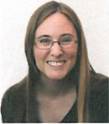 Dr. Sara Byron is a Research Assistant Professor in the Center for Translational Innovation at TGen. Her research interests center on understanding the molecular mechanisms whereby aberrations in oncogenes and tumor suppressor genes lead to tumorigenesis, evaluating the clinical consequences of aberrant pathway activation in cancer, and investigating the genetic context associated with sensitivity and resistance to inhibition of pathways dysregulated in cancer.
In the Center for Translational Innovation, Dr. Byron’s group focuses on content analysis of exome and RNA-sequencing data and knowledgebase development to map drug-gene relationships and pharmacological considerations for indicated therapeutics to identify clinically actionable vulnerabilities. As part of TGen’s precision medicine program, she is involved in various collaborative studies covering a broad spectrum of cancers, including brain tumors, melanoma, and lung cancer.
Sara received her PhD in pharmacology from the University of Minnesota, where she studied insulin-like growth factor receptor signaling in breast cancer under the direction of Dr. Douglas Yee. She joined TGen as a postdoctoral fellow in 2006, working with Dr. Pamela Pollock to investigate the molecular mechanisms and biological consequences of FGFR2 mutations in melanoma, endometrialcancer, and ovarian cancer, and then with Dr. SuWon Kim to explore the influence of chromatin modifications on pathway regulation in breast cancer.
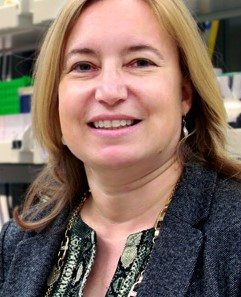 Karen Anderson is an associate professor at the Biodesign Institute at Arizona State University’s Virginia G. Piper Center for Personalized Diagnostics and ASU’s School of Life Sciences. She is also a medical oncologist and an associate professor of medicine at Mayo Clinic Arizona.
Anderson is focused on understanding how the immune response can be used to detect and alter cancer development. To create an effective cancer immunotherapy, Anderson’s team identifies target antigens and pushes scientific understanding of the mechanisms of immune regulation that limit effective immunotherapy.
Before moving to Arizona in 2011, Anderson was an instructor in medicine at Harvard Medical School’s Dana Farber Cancer Institute where she also completed her clinical fellowship in adult hematology and oncology and served as a medical oncologist at the Breast Oncology Center. While at Data Farber, Anderson led two investigator-initiated breast cancer vaccine trials.
One challenge in tumor immunology is how to measure immune responses across the proteome. Antibodies to tumor antigens can be detected in the blood of cancer patients and be used as biomarkers for early cancer detection. Anderson’s team uses custom protein microarrays and bead-array assays to detect these antibodies and has identified novel biomarkers for the detection of breast, ovarian, and human papillomavirus-associated cancers.
Anderson developed novel assays for the detection of serum antibodies to the HPV16 proteome, which are strongly detected in HPV-associated oropharyngeal cancer patient sera. She is evaluating these antibodies as diagnostic and prognostic biomarkers.
The Center for Personalized Diagnostics at ASU, where the Anderson Lab is housed, has adapted custom protein microarray technology developed for high-throughput screening of tumor antigen-specific antibodies. The team has developed secondary confirmatory assays for rapid antibody detection using plate-based and bead-based formats, resulting in identifying panels of autoantibody-based biomarkers for breast, ovarian, and pancreatic cancers.
Anderson is board certified in internal medicine and medical oncology. She has written more than 40 peer-reviewed articles, reviews, book chapters and editorials. Anderson serves as committee co-chair of the National Cancer Institute’s Early Detection Research Network Breast/Gyn Cancers Collaborative Group and is a member of NCI’s Cancer Biomarkers Study Section. She is a member of the American Association for Cancer Research and the American Society of Clinical Oncology.
Anderson earned a bachelor’s degree in chemistry from the University of Virginia. At Duke University, she completed the Medical Scientist Training Program in which she earned a medical degree at the School of Medicine and a doctorate from the department of microbiology and immunology. Anderson completed her medical internship and residency at Brigham and Women’s Hospital Department of Internal Medicine.